To provide you with the best experience, cookies are used on this site. Find out more here.

To provide you with the best experience, cookies are used on this site. Find out more here.
To build your own Itinerary, click  to add an item to your Itinerary basket.
Already saved an Itinerary?





Saturday 2 May 2026 | 1pm - 2.30pm
Nottingham Contemporary
Free even, donations welcome
Nottingham Contemporary are thrilled to be presenting Cemetery of Martyrs the first solo exhibition in a major cultural institution in the UK by Dala Nasser (b.1990, Lebanon). The exhibition features a large-scale sculptural and sonic installation that invites audiences into a collective space of mourning and remembrance.
Join Dala Nasser for an Artist Talk and audience Q&A to learn more about her work on display at Nottingham Contemporary.
By using the process of frottage (the technique of taking a rubbing from an uneven surface), Nasser has transformed the gallery space into a symbolic graveyard, creating a collection of charcoal rubbings collected from the graves of seminal artists, writers, poets, filmmakers, historians and journalists from across Lebanon, Egypt, Jordan and England. Representing cultural figures from the mid nineteenth century (specifically the Nahda, Arab Renaissance) to the present day, the work honours those who fought for independence and freedom in times of political dominance and occupation and whose art, writing, and intellectual contributions have shaped the notion of true sovereignty in Western Asia.
As an artist working through abstraction and alternative forms of image-making, Dala Nasser integrates sound, performance and film in her practice, but remains quintessentially a painter as she thinks through abstraction and the medium's most elementary materials: fabric, pigments, stretcher bars, and mark making.
In her practice, Dala understands material not only as form but as a witness to historical conditions, marked by the enduring forces of colonial systems and the ecological and psychological disintegration they cause. Her works emerge through processes in which materials act as agents of memory and testimony. She works with natural elements such as soil, ash, clay, charcoal, plants, and insects, each intimately tied to the landscap and applied to fabric through acts of staining, soaking, dyeing, and rubbing. Often created via frottage on land or spiritual sites, these works serve as archives: porous surfaces that register the traces of lived experience and environmental transformation foregrounding non-claimed histories, ecologies of slow violence, and colonial theft in times and places where human language has been rendered insufficient or out of reach.
Sorry, this event has passed
Nottingham Contemporary is one of the largest contemporary art galleries in the UK,…
Enter and explore a whole new world in the caves underneath Nottingham city and descend…
Weekday Cross, in the historic Lace Market area of Nottingham, was once the main market…
Eric Irons OBE, Britain’s first black magistrate and well-known campaigner for social…
A mural, which celebrates Nottingham’s pioneering history with the lace industry, has…
Meet amazing, costumed characters from Nottingham's history in our Grade II* listed,…
t Mary’s Church – Grade 1 Listed and the largest medieval building in the city of…
Number one for shopping in Nottingham, Debbie Bryan are an award winning, independent…
Lindle creates self-guided treasure hunts in 16 UK cities. Each hunt is a flexible,…
St Peter’s Church is one of the three mediaeval churches in Nottingham, the others being…
The library, which is part of the new Broad Marsh Car Park and Bus Station complex, puts…
Nottingham's leading architect Watson Fothergill has some magnificent buildings within…
The Adams & Page Building dates back to 10th July 1855 and sits proudly as the largest…
Unveiling in January 2025, this powerful new sculpture stands in Nottingham's Green…
Sir James Matthew Barrie was a Scottish author and dramatist, best remembered today as…
The Brian Clough statue stands proudly in Nottingham city centre just off Old Market…
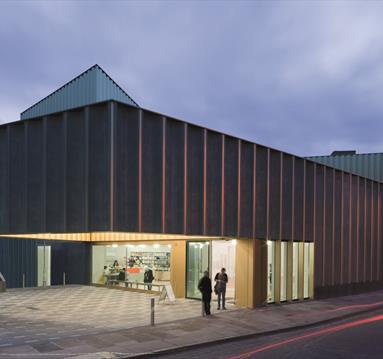 Nottingham Contemporary, NottinghamNottingham Contemporary is one of the largest contemporary art galleries in the UK, presenting free exhibitions, special events, and family activities.
© Visit Nottinghamshire 2026. All Rights Reserved





.png)
.png)








.png)