

 to add an item to your Itinerary basket.



.png)
.png)


A beloved symbol of Sherwood Forest and a legend in its own right. After a life spanning more than a millennium, our beloved and legendary Major Oak has reached the end of its remarkable life.
As a true staple in Sherwood Forest, the Major Oak has woven its way into its history, folkore and heritage. Whether it's through treasured childhood memories, casual Sunday strolls through the forest or a bucket list visit – the ancient tree has also found its way into our hearts.To honour and commemorate The Major Oak and its eventful life, we will be delving into the tree’s legendary heritage, going back to where the tree planted its roots all those years ago, Sherwood Forest and everything that followed along the way.
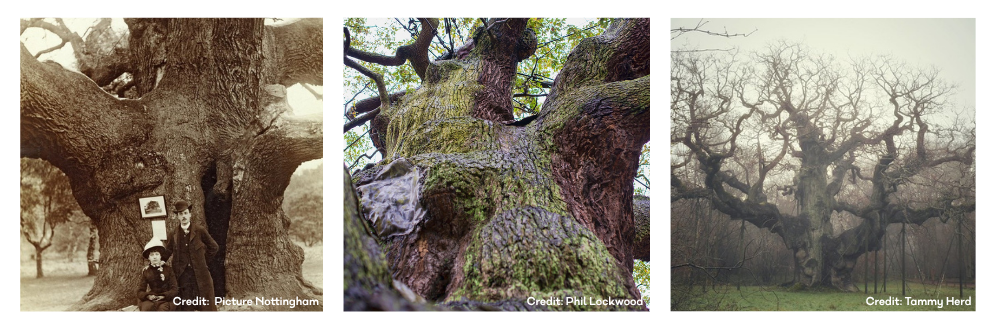
Boasting hundreds of ancient oaks that have been thriving here for more than 500 years, Sherwood Forest is certainly a unique place to visit. Among those nestled into the woodlands is our beloved Major Oak. Having endlessly renewed itself, the Major Oak is thought to be between 800 and 1,000 years old, spanning a lifetime of historic events like the Norman Conquest, the English Civil War and the Industrial Revolution to name a few.
The tree became known as the Major Oak after local antiquarian Major Hayman Rooke documented the remarkable tree in his 1790 publication, introducing the oak to a wider audience and having helped establish Sherwood Forest as a destination for visitors from across Britain and beyond. With a canopy spread of 28 metres at its’ peak vitality, a trunk circumference of 11 metres and an estimated weight of 23 tonnes, the ancient oak has grown into one of the biggest oak trees in the UK as we know it today – staying true to its name.
Robin Hood's Hideout
Like Sherwood Forest, the Major Oak is inextricably linked to our favourite legendary outlaw – Robin Hood. Ancient poems and ballads dating back as far as the 14th century have tied world’s most famous outlaw to the woodlands of Sherwood Forest. With legend claiming the outlaw and his Merry Men sheltered within the vast hollow trunk of the Major Oak while evading the Sheriff of Nottingham, the tree’s association with Robin Hood helped cement its place in folklore. The fascinating folklore led to the tree not only being a remarkable natural icon, but also a synonym for the outlaw mythology of Sherwood and renowned as Robin Hood’s secret hideaway.
Beloved by many
If the combination of ancient history, lively nature and incredible folklore don’t cause intrigue, what will? This iconic mix and the vast size of the tree itself have attracted countless visitors to Sherwood Forest. After all, a trip to Sherwood isn’t complete without gazing upon the sprawling canopy of the Major Oak and admiring the landmark in all its glory. For more than 230 years, travellers have journeyed to see this extraordinary natural wonder, making it not only Nottinghamshire’s most famous tree, but one of Britain’s most treasured landmarks. Its vast branches, distinctive hollow trunk and enduring presence have inspired stories, artworks, photographs and memories that span generations.
.png)
The importance of Wildlife
Though known for its impressive height and folklore and its cultural and symbolic importance, the Major Oak also is of huge importance for Sherwood Forest’s wildlife. Until recently, the tree was one of the few hundred living Ancient Oak trees remaining in the forest’s landscape. Ancient trees, like the Major Oak, provide a rare and vital habitat for hundreds of species, many of which are under great threat. Once an ancient tree dies, the decaying wood habitat it provides for those species becomes finite, making it of huge importance that the loss of living ancient and veteran trees is slowed down, to keep a sustained decaying wood resource and reduce the threat of disruption to the entire ecosystem. To help provide a haven for wildlife in the forest, the tree will continue to stand in Sherwood Forest as a natural monument.
No Effort Spared
It’s no secret that the Major Oak has been declining in the last several years. Having to deal with the increasing pressures of climate change, drought and extreme temperatures takes its toll on nature, and the Major Oak is no exception. For more than 100 years the Major Oak has been the subject of many attempts to keep its emblematic and exceptional form. From wooden supports, iron rods and braces installed in the crown of the tree by 1904, to the metal poles in the early 2000s aimed to carry the weight of the tree’s heavy branches. Even more recent work with experts at hand to improve the condition of the soil around the tree’s roots and allowing grasses and other plants around the tree to take its natural course, though having helped restore the health and biodiversity of the woodland surrounding the Major Oak, could not bring the tree back to its former glory or extend the tree's lifespan.
While the loss of the Major Oak marks the end of an era for Sherwood Forest, the legendary oak tree that captured all our hearts will be entering a new chapter. Leaving behind a colossal legacy, the Major Oak has seen it all. From ancient folklore and various lifetimes of historical events to outliving entire eras of human history and becoming a legend in its own right. To honour the magnificent tree and its huge importance to not only Sherwood Forest, but also its countless visitors, the tree will continue to stand in the forest as a natural monument, slowly becoming a part of the ecosystem, providing a vital habitat for wildlife and a lasting reminder of the stories, heritage and wonder that have made it one of Britain's most treasured trees.
Some legends never truly fade.
Related

Sherwood Forest, a 450-acre country park and nature reserve, is home to the well-loved veteran oak tree the Major Oak, a tree renowned for its connection to Nottinghamshire’s legendary hero Robin Hood.
Home of Robin Hood and once part of a royal hunting forest, Sherwood Forest Country Park covers 450 acres and incorporates some truly ancient areas of native woodland.
Comments
Nobody has commented on this post yet, why not send us your thoughts and be the first?